
Advertisement
F. Scott Fitzgerald observed that “in a real dark night of the soul, it is always three o’clock in the morning.” Microsoft’s latest Copilot usage analysis suggests this nocturnal tendency toward existential contemplation persists in the AI age – with religion and philosophy conversations rising through the rankings during early morning hours.
The Microsoft AI (MAI) research team analysed 37.5 million anonymised conversations to uncover when and how users turn to Copilot for different needs. The findings, published December 10, reveal distinct AI use patterns that follow surprisingly human rhythms – from late-night philosophical queries to Valentine’s Day relationship anxiety, and the strict divide between weekday coding and weekend gaming.
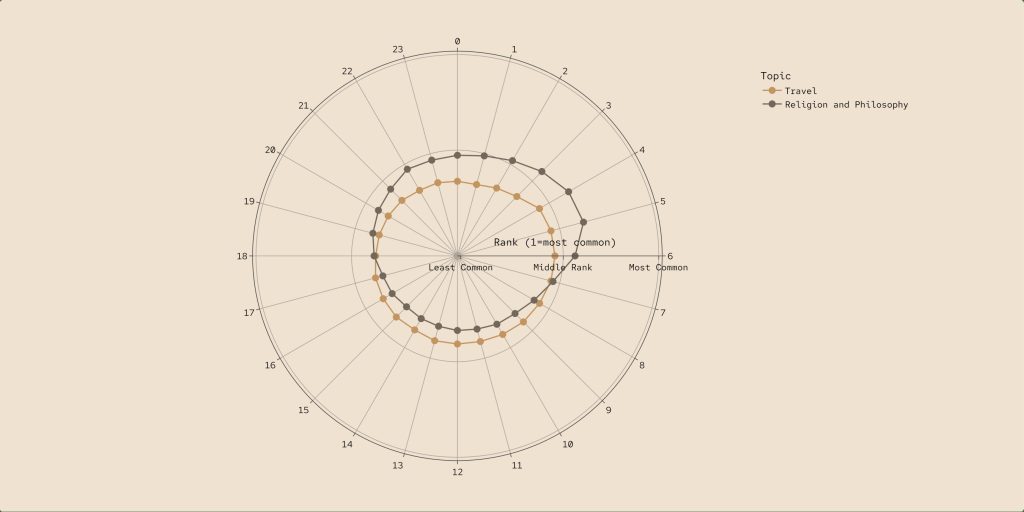
According to the report authored by Bea Costa-Gomes and Seth Spielman, religion and philosophy conversations rise through the rankings during early morning hours. Travel-related discussions, by contrast, peak during typical commuting times, suggesting users plan trips while in transit. “The larger-than-life questions seem to have a rise during the early hours of the morning, with ‘Religion and Philosophy’ rising through the ranks,” the researchers noted in their paper.
The temporal divide reflects different states of mind: practical planning during active hours versus contemplative questioning during quiet moments. The pattern challenges assumptions about AI as merely a productivity tool, revealing its role in addressing fundamental human curiosity.
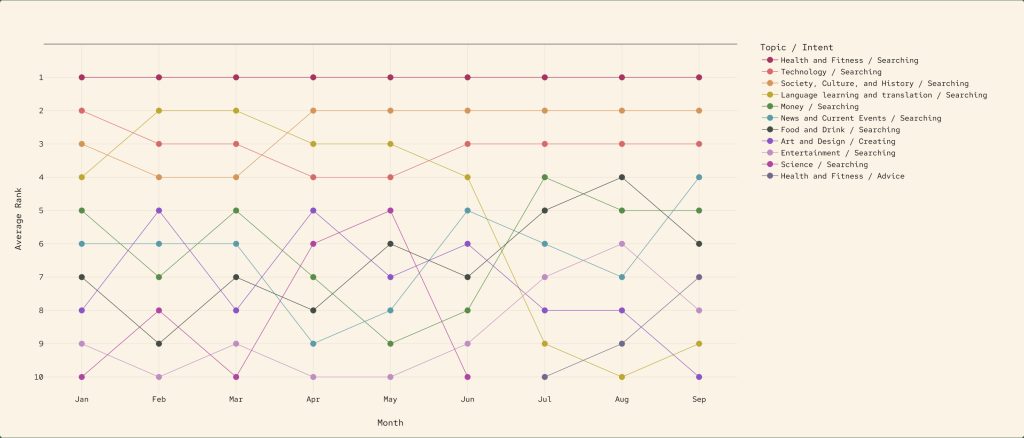
Health-related topics ranked consistently as the most common conversation type on mobile devices throughout 2025, regardless of time, day, or month. Users turned to Copilot for wellness tracking, health tips, and daily routine management with notable consistency.
“When it comes to mobile, with its intimacy and immediacy, nothing tops our health,” the researchers wrote.
The dominance of health queries on mobile devices – but not desktops – suggests users view smartphones as more personal companions for sensitive topics. The use analysis indicates AI assistants are becoming integrated into daily health management routines.
August data revealed a clear cyclical pattern between programming and gaming topics. Programming conversations climbed from Monday through Friday, while gaming queries surged on weekends. Users were equally likely to engage with both topics, but strictly segregated by day of the week.
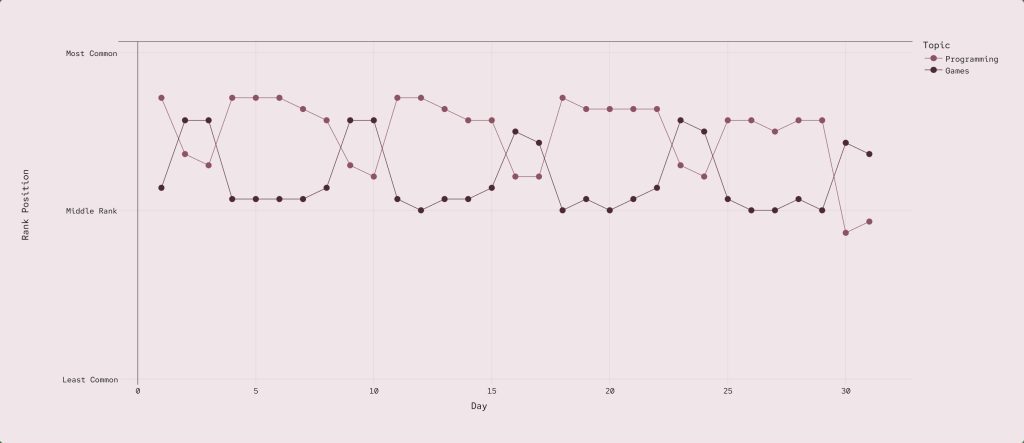
“The crossover hints at a vibrant, creative community that loves to code during the week and play during the weekends in equal measure,” according to the report. The temporal separation suggests users maintain clear boundaries between work and leisure, even when both involve digital activities.
The Copilot use analysis showed February brought a pronounced spike in relationship-related conversations, peaking specifically on Valentine’s Day. Personal growth and wellness discussions also increased before the holiday, as users sought guidance for navigating romantic expectations.
“Whether it was in preparing for Valentine’s day, or facing the day and the relationships, we saw a spike in activity as people turned to Copilot for guidance, reminders, and support,” the researchers observed. The pattern reveals how AI use patterns align with cultural moments and social pressures, with users seeking private counsel from AI during emotionally charged periods.
While information search remains Copilot’s most popular function, Microsoft’s analysis detected a clear rise in users seeking advice, particularly on personal topics including relationships and life decisions.
“The growing trend highlights how digital tools are becoming trusted companions for life’s everyday questions,” the report stated.
The shift from purely informational queries to advice-seeking represents an evolution in how users conceptualise AI assistants – from search engines to consultants.
Microsoft’s research team emphasised that their analysis maintained user privacy by extracting only conversation summaries rather than full content. The system identifies topic and intent while avoiding individual-level data exposure. “Our system doesn’t just de-identify conversations; it only extracts the summary of the conversation, from which we learn the topic and the intent, and maintains full privacy,” Costa-Gomes and Spielman explained.
The 37.5 million conversation sample represents a subset of Copilot’s total use, though Microsoft did not disclose the full user base or conversation volume.
Understanding these AI use patterns informs feature development, according to Microsoft. The company noted that recognising what matters most to users – health, creativity, and support during key moments – enables designing features that fit naturally into daily life. “It’s also clear from these uses that what Copilot says matters. They show why it’s so important that we hold ourselves to a high bar for quality,” the researchers wrote.
The findings complement recent broader industry analysis of AI use patterns, including OpenRouter’s report showing Chinese AI models gaining global adoption through cost efficiency and performance improvements. Microsoft’s temporal focus adds behavioural depth to understanding how AI assistants integrate into human routines.
The research arrives as Microsoft expands its AI infrastructure, with the company’s next-generation GB200 cluster now operational at MAI.
The use patterns suggest AI assistants are evolving beyond tools into companions that adapt to human rhythms – answering practical questions during daylight hours while entertaining philosophical musings when users can’t sleep.
See also: Microsoft ‘Promptions’ fix AI prompts failing to deliver

Want to learn more about AI and big data from industry leaders? Check out AI & Big Data Expo taking place in Amsterdam, California, and London. The comprehensive event is part of TechEx and is co-located with other leading technology events. Click here for more information.
AI News is powered by TechForge Media. Explore other upcoming enterprise technology events and webinars here.

Google has rolled out Private AI Compute, a new cloud-based processing system designed to bring the privacy of on-device AI to the cloud. The platform aims to give users faster, more capable AI experiences without compromising data security. It combines Google’s most advanced Gemini models with strict privacy safeguards, reflecting the company’s ongoing effort to make AI both powerful and responsible.
Advertisement

If you’ve ever thought companies talk more than act when it comes to their AI strategy, a new Cisco report backs you up. It turns out that just 13 percent globally are actually prepared for the AI revolution.

For all the progress in artificial intelligence, most video security systems still fail at recognising context in real-world conditions. The majority of cameras can capture real-time footage, but struggle to interpret it. This is a problem turning into a growing concern for smart city designers, manufacturers and schools, each of which may depend on AI to keep people and property safe.

Adopting AI at scale can be difficult. Enterprises around the world are discovering the pace of AI deployment is frustratingly slow as they face implementation, integration, and customisation challenges. Generative AI is undoubtedly powerful, but it can be complex, particularly for businesses starting from scratch.

The AI adoption in China has reached unprecedented levels, with the country’s generative artificial intelligence user base doubling to 515 million in just six months, according to a report released by the China Internet Network Information Centre (CNNIC).
The content available on this website (including text, graphics, images, and information) is intended for general informational purposes only. Materials, details, terms of use, and descriptions presented on these pages may be changed without prior notice.

 Popular News