
Mining conglomerate BHP describes AI as the way it’s turning operational data into better day-to-day decisions. A blog post from the company highlights the analysis of data from sensors and monitoring systems to spot patterns and flag issues for plant machinery, giving choices to decision-makers that can improve efficiency and safety – plus reduce environmental impact.

The potential Tesla-Intel chip partnership could deliver AI chips at just 10% of Nvidia’s cost – a claim that represents a significant development in AI infrastructure that enterprise technology leaders cannot afford to ignore.
Advertisement
 Popular News
When Visa unveiled its Intelligent Commerce platform for Asia Pacific on November 12, it wasn’t just launching another payment feature—it was building AI commerce infrastructure to solve a crisis most merchants haven’t noticed yet: their websites are being flooded by AI agents, and there’s no reliable way to tell which ones are legitimate shoppers and which are malicious bots.

JPMorgan Chase’s AI strategy is delivering measurable returns – but at a human cost. The bank isn’t hiding the fact. With 200,000 employees now using its proprietary LLM Suite platform daily and AI benefits growing 30-40% annually, America’s largest bank is executing what Chief Analytics Officer Derek Waldron calls a plan to create the world’s first “fully AI-connected enterprise.”

Amazon Web Services has scored another major win for its custom AWS Trainium accelerators after striking a deal with AI video startup Decart. The partnership will see Decart optimise its flagship Lucy model on AWS Trainium3 to support real-time video generation, and highlight the growing popularity of AI accelerators over Nvidia’s graphics processing units.

While tech giants pour billions into computational power to train frontier AI models, China’s DeepSeek has achieved comparable results by working smarter, not harder. The DeepSeek V3.2 AI model matches OpenAI’s GPT-5 in reasoning benchmarks despite using ‘fewer total training FLOPs’ – a breakthrough that could reshape how the industry thinks about building advanced artificial intelligence.
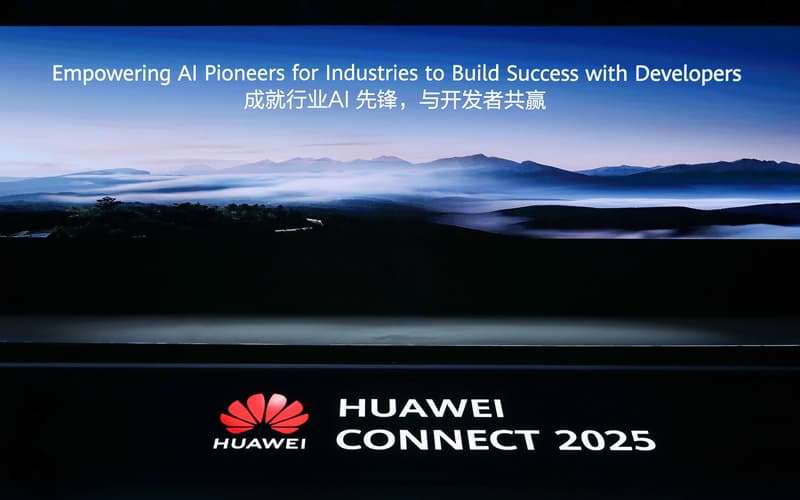
Open-source AI development took centre stage at Huawei Connect 2025 last week, with Huawei laying out implementation timelines and the technical specifics around making its entire AI software stack publicly available by year-end.
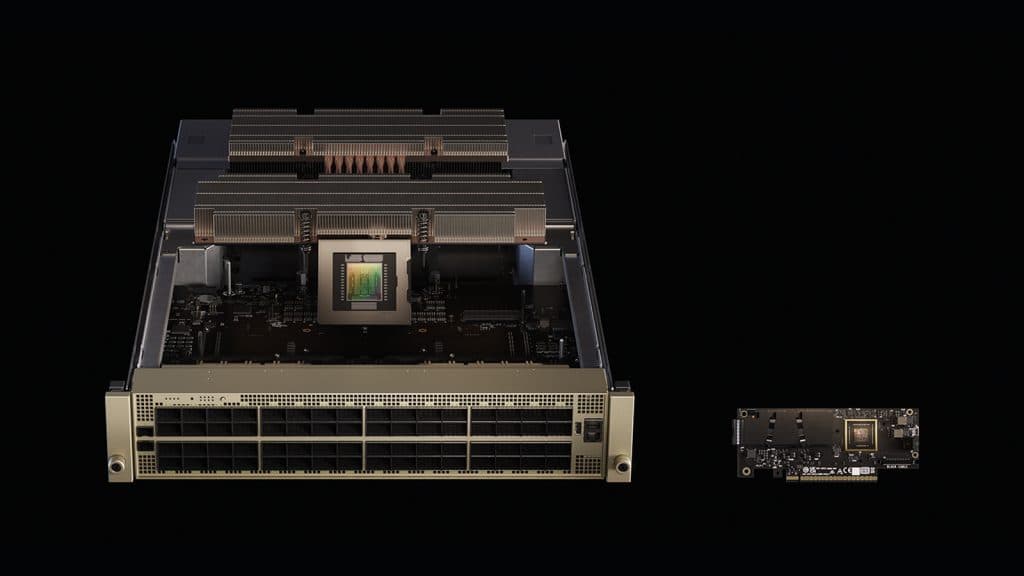
Meta and Oracle are upgrading their AI data centres with NVIDIA’s Spectrum-X Ethernet networking switches — technology built to handle the growing demands of large-scale AI systems. Both companies are adopting Spectrum-X as part of an open networking framework designed to improve AI training efficiency and accelerate deployment across massive compute clusters.

A new report from Red Hat finds that 89 percent of businesses are yet to see any customer value from their AI endeavours. However, organisations anticipate a 32 percent increase in AI investment by 2026.
Guest author: Or Hillel, Green Lamp

For all the progress in artificial intelligence, most video security systems still fail at recognising context in real-world conditions. The majority of cameras can capture real-time footage, but struggle to interpret it. This is a problem turning into a growing concern for smart city designers, manufacturers and schools, each of which may depend on AI to keep people and property safe.

The AI adoption in China has reached unprecedented levels, with the country’s generative artificial intelligence user base doubling to 515 million in just six months, according to a report released by the China Internet Network Information Centre (CNNIC).

Digital payments and fintech company Ant International, has won the NeurIPS Competition of Fairness in AI Face Detection. The company says it’s committed to developing secure and inclusive financial services, particularly as deepfake technologies are becoming more common.

InTouchNow.ai is now offering doctors surgeries a piece of software designed to modernise phone answering, designed to reduce hold times and create a smoother, more responsive experience for patients and staff. In the UK, many GP (general practice) surgeries’ phone lines are tied up in the mornings as patients try to contact their medical practitioner for appointments. More acute need can be delayed among calls with routine enquiries, meaning high-priority callers can be left waiting for long periods.
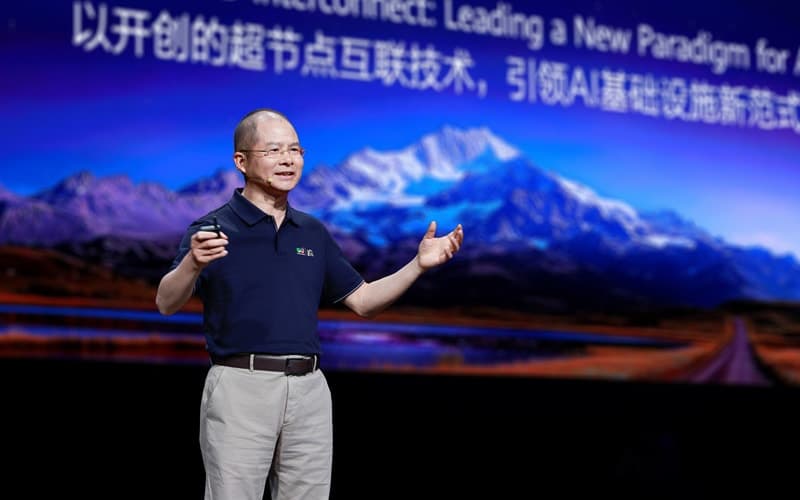
Imagine connecting thousands of powerful AI chips scattered in dozens of server cabinets and making them work together as if they were a single, massive computer. That is exactly what Huawei demonstrated at HUAWEI CONNECT 2025, where the company unveiled a breakthrough in AI infrastructure architecture that could reshape how the world builds and scales artificial intelligence systems.

Solana’s high-speed platform is fast becoming the preferred home for independent AI programmes. It comes at a time when advanced uses of technology have led to significant increases in cyberattacks. This article details the escalating malware threats for the cryptocurrency community.

OpenAI is on a spending spree to secure its AI compute supply chain, signing a new deal with AWS as part of its multi-cloud strategy.

New adoption data from Perplexity reveals how AI agents are driving workflow efficiency gains by taking over complex enterprise tasks.

Enterprise leaders are pressing ahead with artificial intelligence, even as some early results remain uneven. Reporting from the Wall Street Journal and Reuters shows that most CEOs expect AI spending to keep rising through 2026, despite difficulty tying those investments to clear, enterprise-wide returns.

If you asked most enterprise leaders which AI tools are delivering ROI, many would point to front-end chatbots or customer support automation. That’s the wrong door. The most value-generating AI systems today aren’t loud, customer-facing marvels. They’re tucked away in backend operations. They work silently, flagging irregularities in real-time, automating risk reviews, mapping data lineage, or helping compliance teams detect anomalies before regulators do. The tools don’t ask for credit, but are saving millions.

AI is spreading through workplaces faster than any other technology in recent memory. Every day, employees connect AI technologies to enterprise systems, often without permission or oversight from IT security teams. The result is what experts call shadow AI – a growing web of tools and integrations that access company data unmonitored.
When Nvidia CEO Jensen Huang initially told the Financial Times that China would “win the AI race” before softening his stance, it crystallised a predicament that’s been years in the making. The world’s most valuable chipmaker now finds itself caught between two superpowers, each wielding the Nvidia AI chip ban as a weapon in a broader technological cold war—and the company’s attempt to please both sides may ultimately satisfy neither.
The content available on this website (including text, graphics, images, and information) is intended for general informational purposes only. Materials, details, terms of use, and descriptions presented on these pages may be changed without prior notice.