
CIOs want to fix IT problems faster without expanding headcount, and many see AI adoption as the solution for their operations.

Producing digital advertising at global scale has become less about one standout campaign and more about volume, speed, and consistency. For consumer brands operating across dozens of markets, the challenge is not creativity alone, but how to keep content flowing without repeating expensive production cycles.
Advertisement
 Popular News
Creativity no longer requires mastering musical instruments or vocals thanks to AI-powered tools like Musicfy and Kits AI. These platforms make music creation accessible by helping you generate songs with realistic vocals, even if you’re new to music production.

Finding the right video editor often feels overwhelming. Between expensive software and clunky interfaces, editing your content might feel more like a chore than an exciting creative process. Enter CapCut, the free video editing app that's changing the game. Promising an intuitive interface and powerful features, CapCut aims to democratize video creation for beginners and pros alike.


Imagine AI Art is rapidly becoming a top choice for creating stunning digital visuals using text prompts. This AI art generator leverages cutting-edge AI and machine learning to turn your words into vivid, detailed artwork. Whether you’re an artist, designer, or content creator, Imagine AI Art provides a seamless way to enhance your creative projects.
Choosing the best AI video generator can feel like navigating a maze of options, especially for those new to AI-powered tools. Runway and Kling have carved significant niches in this space by offering unique features and capabilities. But which one is right for you? This detailed comparison will break down their strengths, weaknesses, and ideal use cases to help you decide.

Zyphra, AMD, and IBM spent a year testing whether AMD’s GPUs and platform can support large-scale AI model training, and the result is ZAYA1.

The emergence of artificial intelligence has fundamentally altered the field of content creation. Tools capable of generating coherent, often impressive, text, are now ubiquitous. Yet, despite their sophistication, AI-generated content presents a persistent challenge because it often has a “robotic” quality, lacking the warmth, nuance, and genuine voice that connects with a human audience. The digital coldness necessitates an important step: humanisation.

Anthropic’s announcement this week that it will deploy up to one million Google Cloud TPUs in a deal worth tens of billions of dollars marks a significant recalibration in enterprise AI infrastructure strategy.

Guest author: Or Hillel, Green Lamp

Google has rolled out Private AI Compute, a new cloud-based processing system designed to bring the privacy of on-device AI to the cloud. The platform aims to give users faster, more capable AI experiences without compromising data security. It combines Google’s most advanced Gemini models with strict privacy safeguards, reflecting the company’s ongoing effort to make AI both powerful and responsible.

If you’ve ever thought companies talk more than act when it comes to their AI strategy, a new Cisco report backs you up. It turns out that just 13 percent globally are actually prepared for the AI revolution.

Artificial intelligence is transforming the way information is created, summarised, and delivered. For publishers, the shift is already visible. Search engines provide AI-generated overviews, users get answers without clicking, and content is scraped by large language models that train on decades of journalism.

With AI workloads becoming more computationally demanding, organisations across the globe are fast realising that traditional centralised providers aren’t always the answer to their burgeoning needs.

Microsoft is forming a new team to research superintelligence and other advanced forms of artificial intelligence.
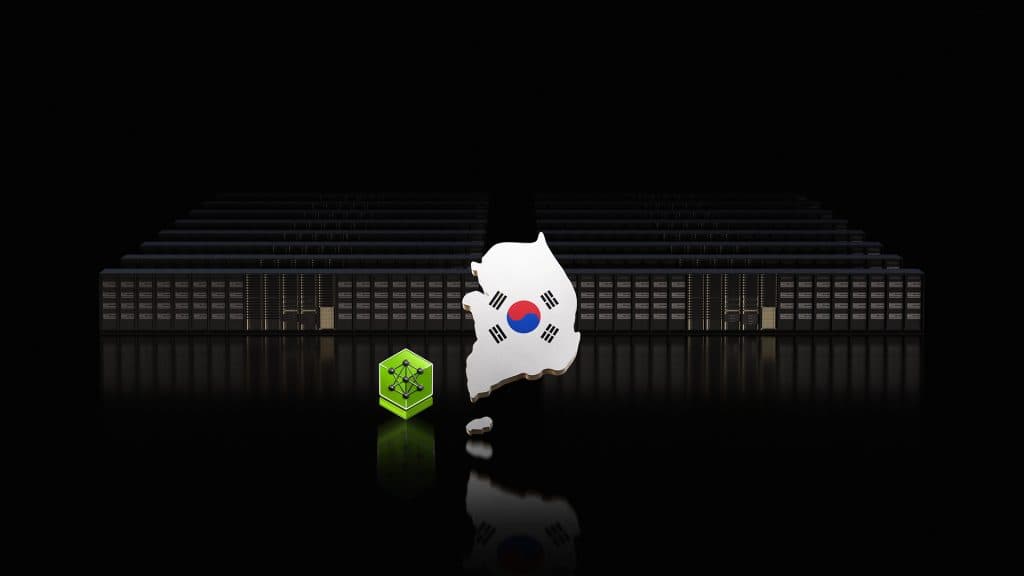
At the APEC CEO Summit, NVIDIA said it is working with public agencies and private companies to build sovereign AI infrastructure across South Korea. The plan includes hundreds of thousands of NVIDIA GPUs across sovereign clouds and AI factories for areas like automotive, manufacturing and telecommunications.

New insight from the CQF Institute, a worldwide network for quantitative finance professionals (quants), reveals that fewer than one in ten specialists believe new graduates possess the AI and machine learning skills necessary to succeed in the industry. This highlights a growing issue in quantitative finance: a lack of human understanding and fluency in the language of machines.

Researchers have developed a new attack that reveals privacy vulnerabilities by determining whether your data was used to train AI models.

A recent industry report [PDF] argues that Britain’s railway network could carry an extra billion journeys by the mid-2030s, building on the 1.6 billion passenger rail journeys recorded to year-end March 2024. The next decade will involve a combination of complexity and control, as more digital systems, data, and interconnected suppliers create the potential for more points of failure.

Boston Consulting Group (BCG) has found a widening chasm separating an elite of AI masters from the majority of firms struggling to generate any value from their AI investments.

Of all the many industries, it’s marketing where AI is no longer an “innovation lab” side project but embedded in briefs, production pipelines, approvals, and media optimisation. A WPP iQ post published in December, based on a webinar with WPP and Stability AI, shows what AI deployment in daily operations looks like.
The content available on this website (including text, graphics, images, and information) is intended for general informational purposes only. Materials, details, terms of use, and descriptions presented on these pages may be changed without prior notice.